|
Spina bifida
Spina bifida is the most frequently occurring permanently disabling
birth defect. It affects approximately one out of every 1,000
newborns in the United States. More children have spina bifida than
have muscular dystrophy, multiple sclerosis, and cystic fibrosis
combined.

Spina
bifida, the most common neural tube defect (NTD), is one of the most
devastating of all birth defects. It results from the failure of the
spine to close properly during the first month of pregnancy. In
severe cases, the spinal cord protrudes through the back and may be
covered by skin or a thin membrane. Surgery to close a newborn's
back is generally performed within 24 hours after birth to minimize
the risk of infection and to preserve existing function in the
spinal cord.
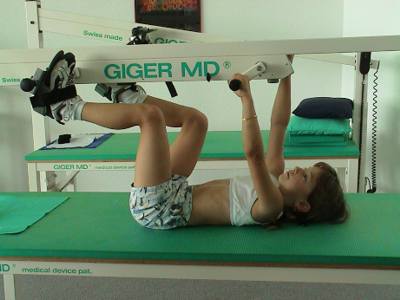
Because of the paralysis resulting from the damage to the spinal
cord, people born with spina bifida may need surgeries and other
extensive medical care. The condition can also cause bowel and
bladder complications. A large percentage of children born with
spina bifida also have hydrocephalus, the accumulation of fluid in
the brain. Hydrocephalus is controlled by a surgical procedure
called "shunting" which relieves the fluid build up in the brain by
redirecting it into the abdominal area. Most children born with spina bifida live well into adulthood as a result of today's
sophisticated medical techniques.
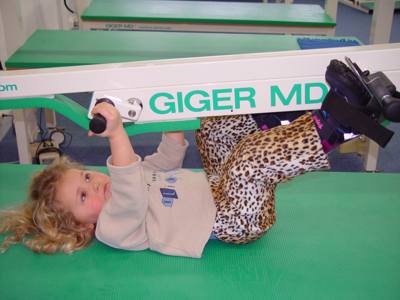
Children
with spina bifida need to learn mobility skills, conventionally with
the use of crutches, braces, or wheelchairs can achieve more
independence. Because of a
revolutionary therapy device
children can become even much more independent than before. Physical
disabilities like spina bifida can have profound effects on the
child's emotional and social development. It is important that
health care professionals, teachers, and parents understand the
child's physical capabilities and limitations. To promote personal
growth, they should encourage children (within the limits of safety
and health) to be independent, to participate in activities with
their non-disabled peers and to assume responsibility for their own
care.
back to the top
|